If you’re reading this, chances are you’re here because you’re interested in LinkedIn as a place for growth.
Not just growth in impressions, but growth in relationships, credibility, and eventually revenue.
That’s exactly why I’m here too.
I’ve spent the last seven months on LinkedIn showing up consistently, experimenting openly, and slowly shifting from posting blindly to building an actual LinkedIn strategy that makes sense for founders, operators, and speakers.
This post is not theory. It’s a breakdown of what I’ve learned by doing.
In This Blog Post
Why LinkedIn Is Still One of the Biggest Opportunities You Might Be Missing
Let’s start with the numbers — because context matters.
LinkedIn now has over one billion members across more than 200 countries, making it one of the largest professional platforms in the world (Influencer Marketing Hub).
It sees roughly 1.7 billion unique visitors globally and generates over one billion interactions per month, with about 40% of users logging in daily (Cognism).
It’s also a serious business.
LinkedIn generated more than $16.3B in revenue in 2024 and now has over 175 million premium users, reinforcing how incentivized the platform is to keep people engaged with high-quality content (Kinsta).
Here’s what matters most.
Only a tiny minority of users post consistently. Most people consume. Very few contribute.
This is not YouTube in 2008 — but clarity, consistency, and relevance still compound faster here than on most platforms.
The Real Problem Most Founders Have With LinkedIn
For a long time, LinkedIn felt random to me.
I was posting daily. Sharing stories. Testing formats.
And nothing made sense.
I didn’t know if posting time mattered, if consistency mattered, or if I was wasting my time.
It felt like shouting into the void.
The turning point came when I stopped treating LinkedIn like a diary and started treating it like a system.
I’ve taken the same system-first approach across platforms — including an Instagram content strategy that reached over one million monthly impressions — and documented exactly how that worked here:
How I Built an Instagram Content Strategy to 1M+ Impressions
Understanding LinkedIn as a Business (Not a Social App)
LinkedIn is a business first.
Its job is to keep users engaged, surface valuable content, and encourage upgrades to paid products.
The algorithm is not random. It’s optimized for retention and experience.
Low-signal content hurts that goal. High-relevance content supports it.
The Three Players in LinkedIn’s Game
There are three participants.
The platform wants engagement and time-on-app.
The consumer wants insight and learning — not sales pitches.
The creator wants visibility, authority, and eventual conversion.
If you don’t understand how these three incentives interact, your content will feel off — even if it’s well written.
Once you see the platform as a system where the platform, the consumer, and the creator are all responding to incentives, the algorithm stops feeling mysterious.
You stop asking, “Why didn’t this post work?” and start asking, “Which player wasn’t served here?”
I break this down in much more depth — including how incentives shape content, distribution, and long-term outcomes — in this deep dive:
Social Media Game Theory: How Platforms, Creators, and Consumers Actually Interact
How the LinkedIn Algorithm Actually Works Now
The biggest shift on LinkedIn is this:
Distribution is no longer driven primarily by your existing network.
The old system rewarded:
- early engagement
- tight-knit networks
- engagement pods
That heavily favored large accounts and manipulators.
Today, LinkedIn operates much closer to a persona-based recommendation system.
It looks at:
- what you write about
- what keywords appear in your profile
- who you engage with
- what content you interact with
Then it places you into interest bubbles with similar users.
That’s why smaller accounts now have a chance to be discovered — if their content is relevant.
Profile Optimization: Your Hidden Distribution Lever
Your LinkedIn profile is not a resume.
It’s an input into the algorithm.
Key areas LinkedIn reads heavily:
- Your headline
- Your banner
- Your About section
- Your company page category
- Your interests and engagement patterns
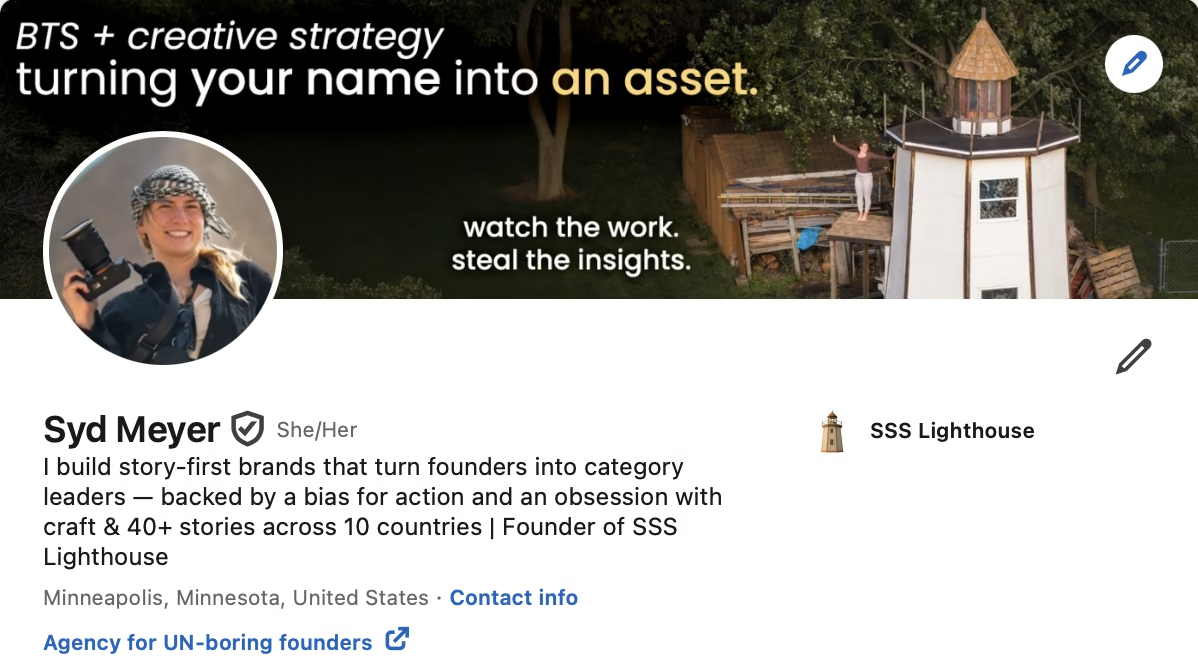
Your banner is free advertising space.
Your headline is what people see when you comment.
Your About section reinforces who LinkedIn should show you to.
I’ve created a free LinkedIn Profile Guide that walks through this step by step — including banner examples, headline formulas, and keyword placement.
You can access it here:
Free LinkedIn Profile Optimization Guide
FAQs
Key Things to Know
Not nearly as much as people think. Early engagement helps, but truly valuable posts tend to find distribution regardless of timing. Posting frequency matters more than posting at the “perfect” hour.
Yes. Niching down helps LinkedIn understand who your content is for and helps humans recognize you faster. Recognition is what drives profile clicks, follows, and conversations — not one-off viral reach.
Your profile is distribution infrastructure. Headlines, banners, and featured sections act as conversion points once someone sees your content. A weak profile leaks opportunity even when posts perform well. Here is our free guide to help you start converting followers and leads.
Yes, because it accelerates learning. Posting more often creates more data, faster feedback loops, and quicker clarity on what actually works. More posts mean more insight, not just more output.
Not consistently. LinkedIn is still experimenting with video user experience. In many cases, text posts, carousels, and images outperform video in reach and engagement.
Very little. LinkedIn is smart enough to read content contextually. Hashtags are secondary at best and don’t meaningfully influence reach anymore.
The Three Content Types LinkedIn Consistently Lifts
Based on platform behavior and testing, LinkedIn tends to amplify:
- Job opportunities
- Career milestones (new roles, promotions, achievements)
- Helpful insights (this is where most creators should focus)
95% of your content should live in category three.
Best Performing Media on LinkedIn (Ranked)
From testing and observation:
- Carousels (PDF uploads, not images)
- Infographics
- Photos (especially selfies)
- Simple text posts
- Video
- Polls
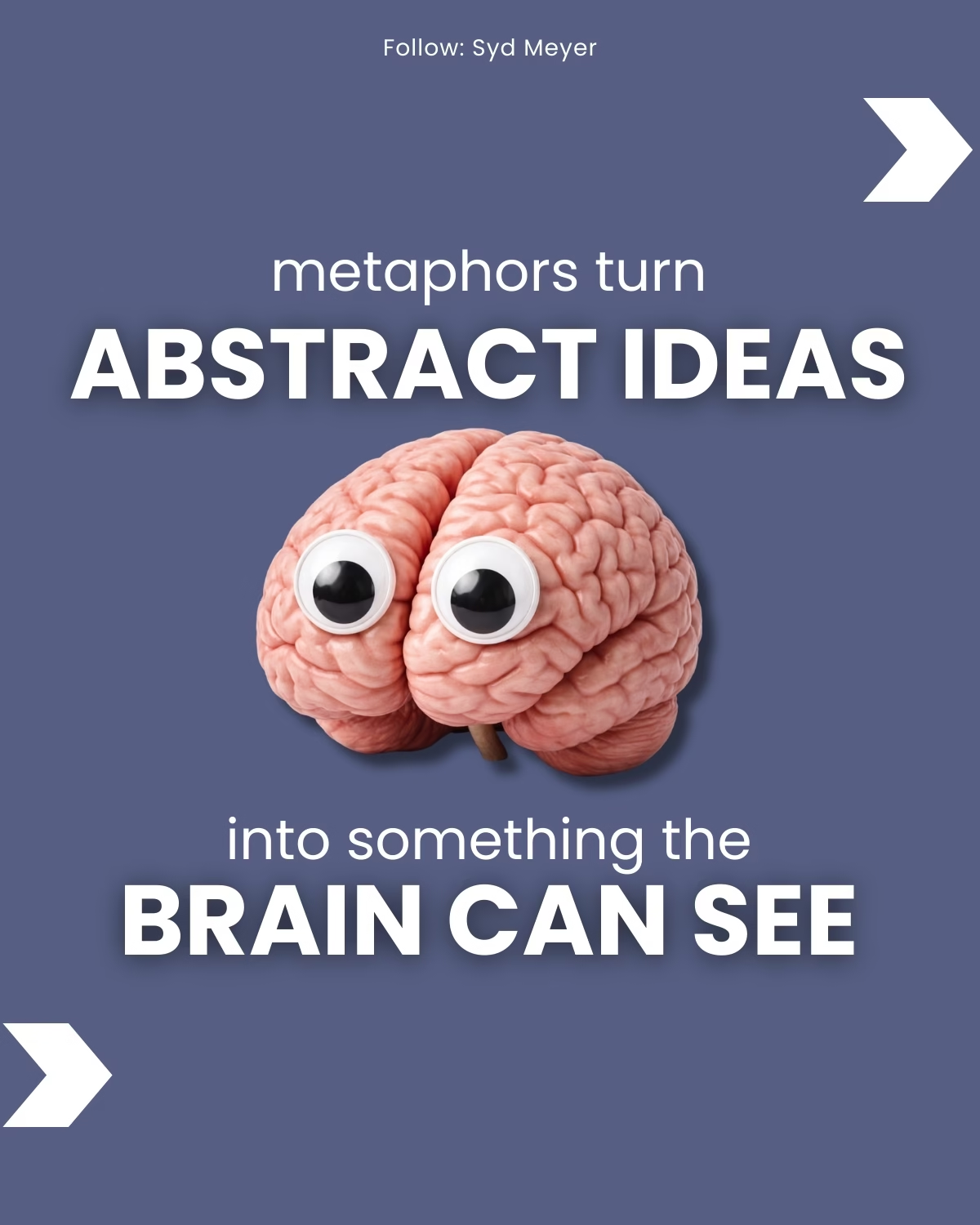
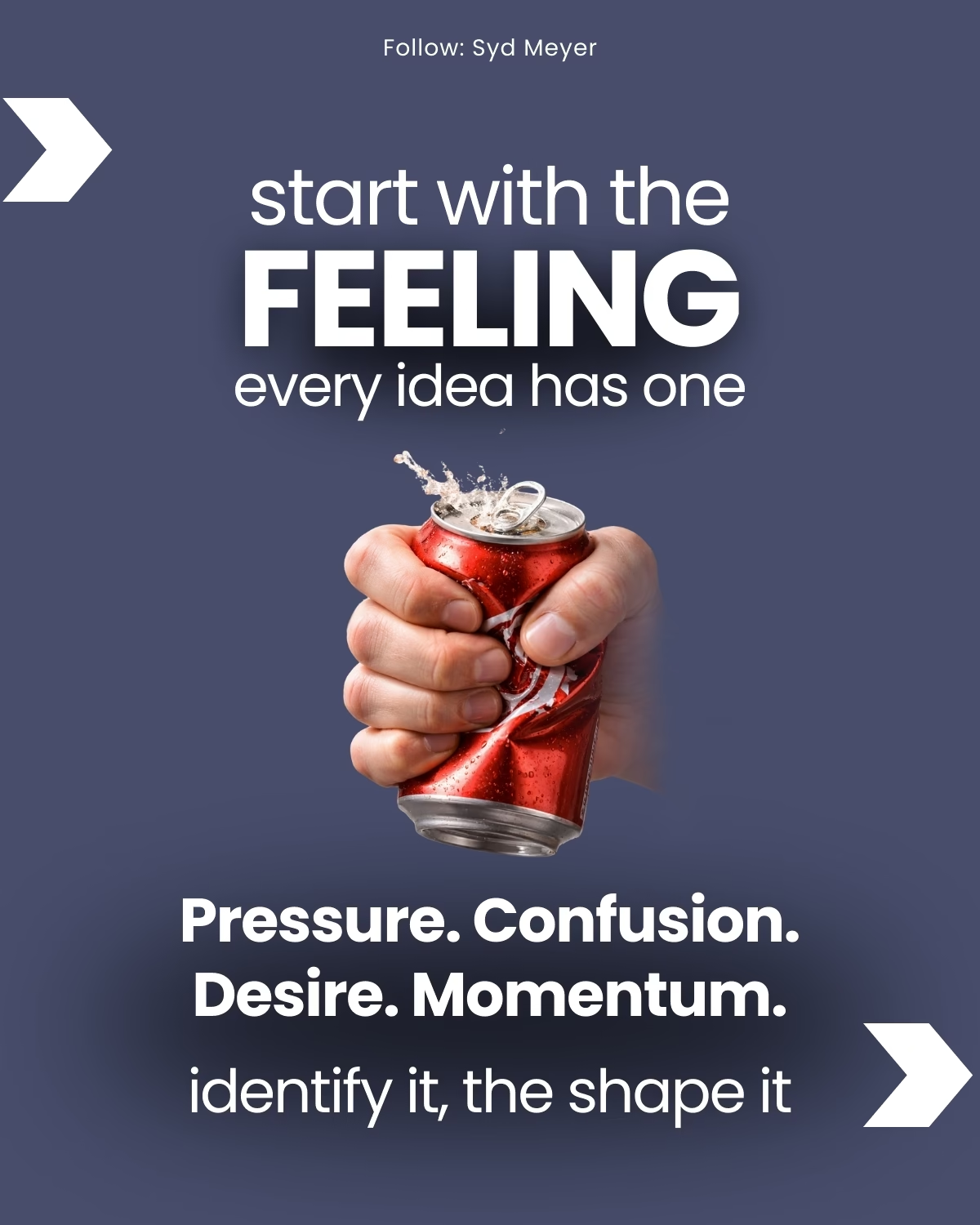
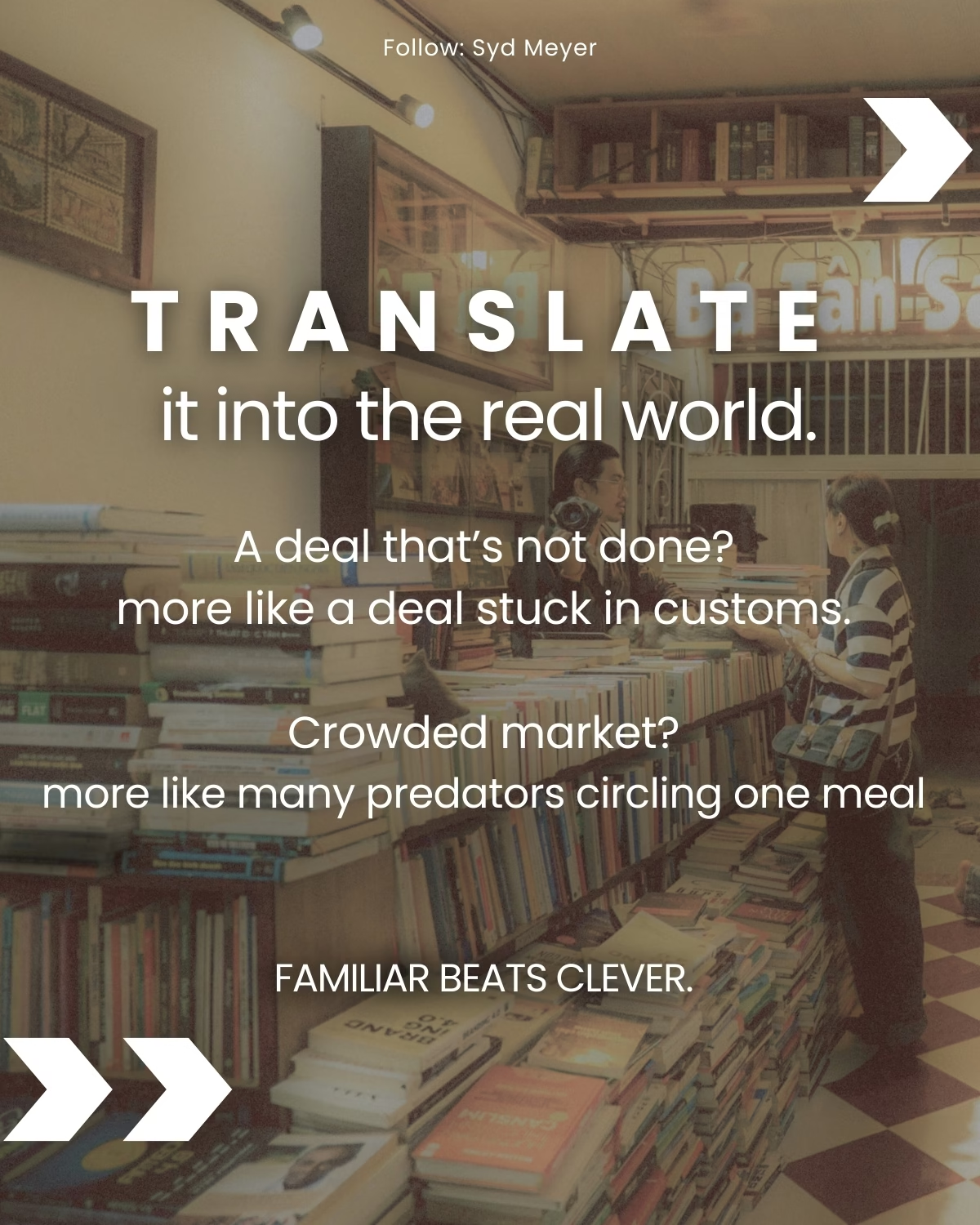
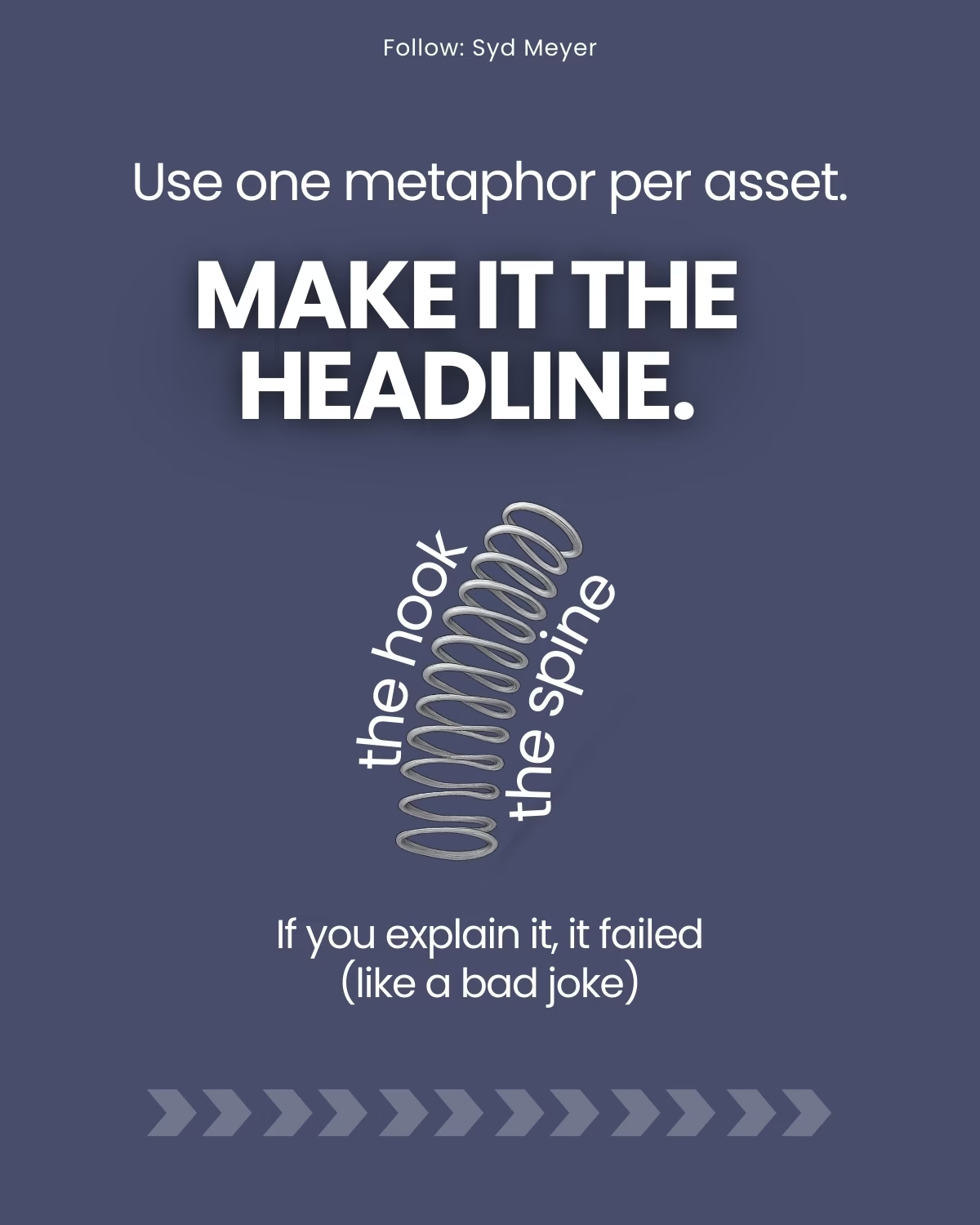
Important note: visuals give you another chance to hook attention. Even simple on-screen text matters.
OTHER IMPORTANT NOTE: I was posting carousels wrong for too long. DONT UPLOAD them as normal picture files (becuase then they don't have the interactive scroll). They need to be a pdf file instead.
The Three Elements I Include in Every Single Post
Every post I publish includes:
1. Authority Signal
- a case study
- a stat
- borrowed authority (quote, research)
2. Originality
If it could have been written by anyone — or generated cleanly by AI — I don’t post it.
Personal details matter. Specific language matters.
3. Transferable Insight
Something the reader can apply, save, or share.
Exposure Effect: Why Showing Up Actually Works
People trust what they recognize.
It takes 7–20 touchpoints for someone to associate:
- your name
- your face
- your industry
Commenting matters.
Posting matters.
Repeating yourself matters.
Seeing your name in comment sections increases:
- profile clicks
- follower conversion
- message replies
This is slow — but it compounds.
Social Selling Index (SSI): What It Is and What It Isn’t
I didn’t even know SSI existed until recently.
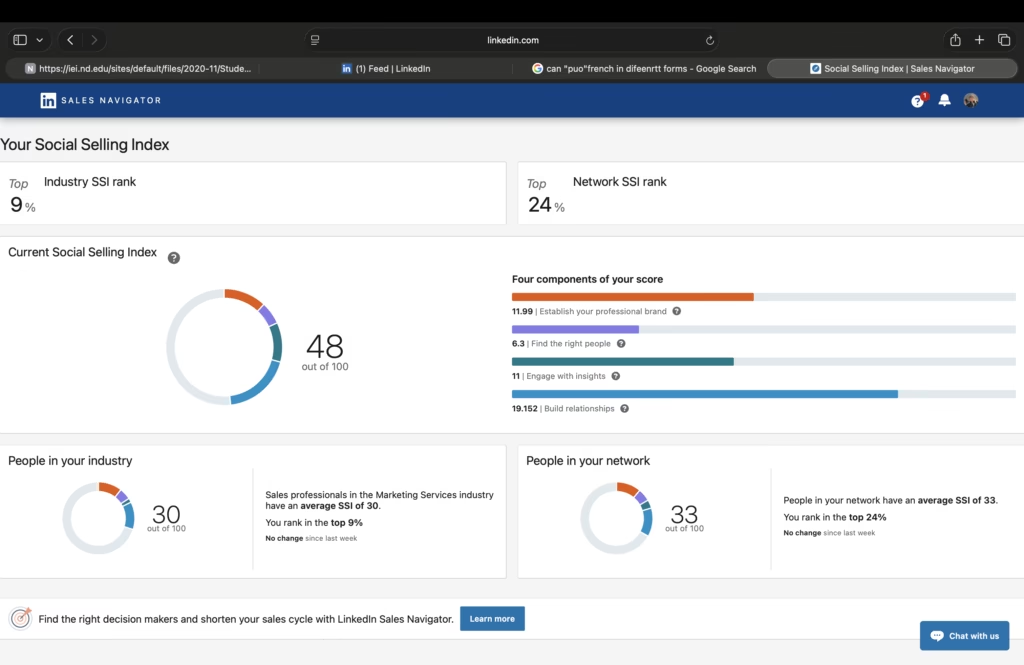
SSI is a visible metric that scores how you use LinkedIn’s sales features.
It does not control reach.
It does not determine distribution.
It’s interesting, but not important. PLEASE do not stress over it.
Find your Social Selling Index (SSI) score here: LinkedIn SSI Score
See mine below! (IT's KINDA SCARY LOOKING, NO??)
The Private Trust Signals LinkedIn Tracks
What does matter is something you cannot see.
LinkedIn tracks behavior internally.
This includes:
- spammy activity
- suspicious automation
- abnormal engagement patterns
I didn't know this was real either. But this is why it is SO important that you do not use automation tools or any APIs that are not "verified LinkedIn tools" because they're one of the quickest ways to get banned.
Protect the reputation of your account like it is everything. It is not worth losing months/years of hard work.
My LinkedIn Strategy Going Into 2026
- I’m going all-in on content
- I’m writing with quarterly themes
- I’m repeating what works
- I’m prioritizing clarity over novelty
- I’m focused on building peer-level trust
My follower count is small.
My pipeline is full.
That’s the metric that matters.
Stop Guessing Your LinkedIn Strategy
If you’re done guessing and ready for a LinkedIn strategy that’s actually intentional, we can help.
We’ll build a repeatable content system that sharpens your positioning, supports growth, and compounds over time — without chasing trends or burning founder hours.