


What Is Social Media Game Theory?

Social media is a lot more fun when you treat it like it’s a game.

Every scroll, like, and post is a move on the board.

That’s the idea behind Kane Kallaway’s concept of Social Media Game Theory, which reframes digital platforms as systems of players, rules, and rewards. In this game, creators compete for attention, algorithms optimize for engagement, and audiences seek emotional payoff.


For brands, mastering this game means knowing which arena you’re in: the Awareness Game or the Conversion Game. Understanding the psychology behind these moves helps you craft a social media strategy that doesn’t just play—it wins.

In short, social media game theory helps marketers make smarter, more strategic moves to maximize reach and conversion.

In This Blog Post

The Awareness Game: Playing for Reach

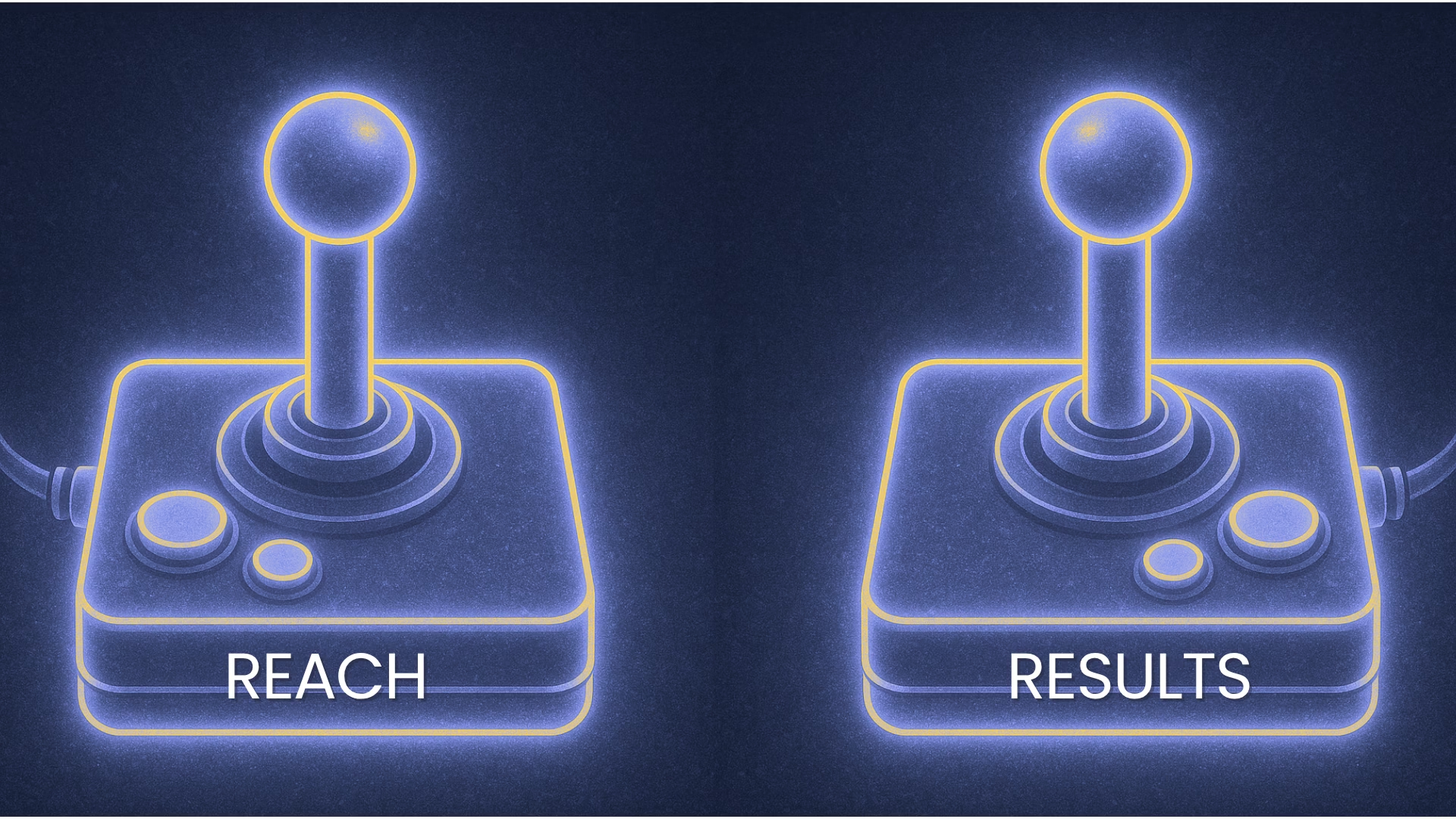
The first level of social media game theory is the Awareness Game.

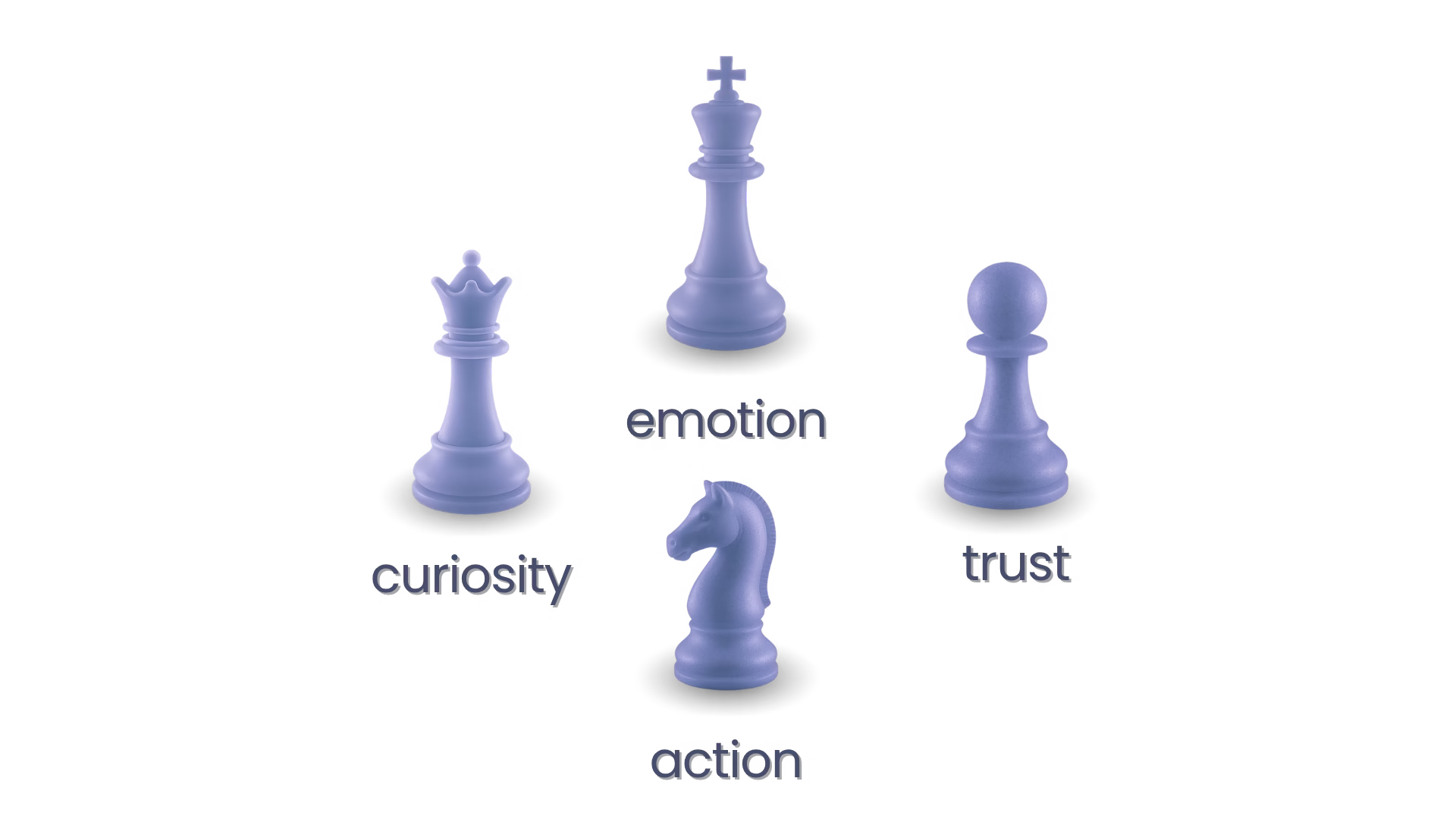
This is where brands compete for attention in a crowded feed. The objective? Reach as many relevant people as possible by triggering emotion—curiosity, pride, or even tension. It’s not about selling yet; it’s about stopping the scroll.

Winning this phase requires content that evokes emotional response and curiosity loops.

Posts that surprise, delight, or challenge a belief invite engagement. As Kallaway notes, “Algorithms play to keep users scrolling.” That means your job is to feed that algorithm with content that extends viewer sessions and drives shares.

In game theory terms, this is a non-cooperative awareness game—you and other brands are simultaneously optimizing for visibility under the same algorithmic rules.

Your moves (content decisions) influence your competitors' visibility and vice versa. The better you understand social media game theory, the better you can anticipate how competitors and algorithms react to your strategy.

The Conversion Game: Playing for Results

Once you’ve earned awareness, the next game begins—the Conversion Game. Here, you’re not trying to reach everyone. You’re aiming to convert trust into action. This stage rewards clarity, empathy, and problem-solving—core principles in any smart content marketing strategy.

Audiences in this game are active players. They already feel a pain point and want tactical, easy-to-implement solutions. Your job is to offer that relief faster than competitors. In other words, your content becomes a series of winning moves that drive behavior—clicks, sign-ups, or purchases.

From a game theory standpoint, this stage resembles a Stackelberg game, where the algorithm acts as the leader setting exposure rules, and creators act as followers optimizing for engagement. The better you understand those rules, the more strategic your moves become. This is why social media game theory can transform how marketers approach trust and conversion.

Key Things to Know

1. What is social media game theory?

Social media game theory views platforms as systems of interacting players—creators, audiences, algorithms, and brands—each with their own incentives. Understanding these dynamics helps marketers make more effective strategic choices. Learn more from Kane Kallaway’s breakdown on YouTube.

2. How do algorithms fit into the game?

Algorithms are the rule-makers. Their goal is to maximize user time on platform. When your content drives shares, comments, and long watch times, the algorithm rewards you with more reach. In this sense, creators “play” by the algorithm’s rules—and successful marketers learn to predict them using social media game theory.

3. What’s the difference between awareness and conversion content?

Awareness content is designed to evoke emotion and spark curiosity—like a powerful hook or story. Conversion content solves specific problems clearly and directly. Both matter, but each requires different moves on the board within a unified content marketing strategy.

4. How can brands balance the two games?

The most effective brands dedicate separate spaces for each. For example, top-of-funnel content plays the Awareness Game on social media, while bottom-funnel campaigns on websites and email sequences play the Conversion Game. For an example, explore our branding strategy services to see how both align.

5. How can small businesses use social media game theory?

Start by observing patterns—what earns likes, shares, and saves in your niche? Then reverse-engineer why. Think of each post as a strategic move: Are you playing to attract attention or to earn trust? Once you define that, every caption and visual becomes more intentional.

6. Where does storytelling fit in?

Storytelling is your way of influencing emotion within the game. It creates connection—the human element algorithms can’t predict. By pairing narrative with clarity, you can dominate both games: reach and results.

Applying Social Media Game Theory to Real-World Marketing

So how can social media game theory guide your everyday marketing? Start by defining your players and objectives.

In each campaign, identify what the algorithm values (shares, saves, watch time) and what your audience values (emotion, relevance, or relief). Then align your creative and analytical efforts accordingly.

For instance, in the Awareness Game, measure success through impressions, engagement rate, and share ratio. In the Conversion Game, focus on link clicks, lead quality, and customer retention.

Both games use psychology, but each rewards a different kind of creativity—emotional for awareness, strategic for conversion.

According to McKinsey’s research on digital engagement, brands that balance emotion and logic in their content outperform competitors by over 60% in conversion effectiveness. This proves that winning the social media game is about playing with both heart and mind.

How Game Theory Can Transform Your Social Media Strategy

Integrating social media game theory into your content marketing strategy means designing every piece of content with intent.

Each post either advances visibility (Awareness Game) or drives conversion (Conversion Game).

Knowing which game you’re playing ensures you measure the right success metrics—reach vs. results.

Here’s a quick framework inspired by Kallaway’s breakdown:


  • Awareness content: Prioritize curiosity hooks, emotional payoffs, and broad appeal.
  • Conversion content: Offer tactical, specific solutions that relieve pain points quickly.
  • Algorithms: Reward engagement depth—comments, saves, watch time.
  • Audiences: Reward emotional authenticity and consistent value.

When your social media strategy aligns these incentives, you’re no longer guessing—you’re playing deliberately and winning the long game.

Final Takeaway

Understanding social media game theory gives you more than strategy, it gives you clarity. You stop creating aimlessly and start making intentional moves.

Every post becomes a decision between reach and results. As Kallaway says, “Most people don’t even know they’re playing.” The ones who do? They win.

Every scroll, post, and click is a move.


Make yours count.


Partner with SSS Lighthouse Creative and craft a social media strategy built to win.

GET IN TOUCH

Contact SSS Lighthouse Creative

Get in touch!

This field is for validation purposes and should be left unchanged.
Name(Required)
Email(Required)
What are you interested in?
Please let us know what's on your mind. Have a question for us? Ask away.

You will now see information with different branding. 

It is still us, with a slightly different look (for our nationwide clients).