



The Idea Habit That Separates Original Founder Content From Mediocre Content (In 4 Steps)

The best compliment I received the other day was simple:

"Your content actually feels human."

That made me pause.

Because for a while, it didn’t.

My posts were structured. Clean. Technically solid.

And still somehow lifeless.

They felt like content.

Not founder content.

Just another polished post floating through the feed.

The thing that changed it had nothing to do with a better prompt.

It came from one habit I forced myself to stick to.

I write down every idea I have.

Every single one.

I’ve been posting on LinkedIn for about eight months now, and I’ve watched the difference this habit makes in real time.

Over time, that habit quietly became the foundation of my founder content strategy.

In This Blog Post

Sea turtle sitting on a blue beanbag chair eating a spaghetti taco

Why founder content strategy starts sounding the same

A lot of founders think they struggle with writing.

But if you pay attention to your day, writing usually isn’t the problem.

The real issue is that the idea shows up, then disappears before it ever turns into content.

You notice something interesting.

You react to something someone says.

Two ideas connect in your head that normally wouldn’t belong together.

For a second you think:

"That would actually make a good post."

Then you move on.

You assume you’ll remember later.

You won’t.

Ideas are perishable.

That’s why so much founder content online starts sounding the same.

Most people sit down to write and try to come up with an idea on the spot.

They open LinkedIn. They stare at the post box.

Then they ask AI what to say.

AI will give you something that technically reads fine.

Structured. Logical. Clean.

But there’s no real perspective behind it.

AI can organize a thought. It cannot have one for you.

Most founders simply never capture the thought in the first place.

The real problem: your content is too far from the original idea

Here’s something I started noticing in my own writing.

Ideas almost never appear when you sit down and say:

"Alright, time to write a post."

They show up at the worst possible times.

In the shower.

Halfway through a conversation.

When you're driving and can't grab your phone.

Or right before you fall asleep when your brain suddenly connects two unrelated thoughts.

If you capture the idea right away, it still sounds like you.

If you wait, you end up spending the next hour trying to recreate a thought that already disappeared.

Most founders assume they'll remember later.

That’s usually the mistake.

Innovation consultants at Thinkergy explain that ideas are transient and often disappear if they aren’t written down immediately.

Research summarized by Day Designer shows that writing ideas down improves memory and frees mental space.

Einstein said it perfectly:

"Paper is to write things down that we need to remember. Our brains are used to think."

Your brain is designed to generate ideas.

It’s terrible at storing them.

Which means if you want original founder content, you have to capture ideas while they’re still alive.

FAQs

Key Things to Know

Most founder content starts sounding the same because many people try to generate ideas only when they sit down to post. By that point the original observation is already gone. Instead of publishing a real thought, the post becomes a cleaned-up version of something generic. A strong founder content strategy captures ideas earlier in the day when they first appear, before they get filtered or forgotten.

Writing ideas down protects them before they disappear. Research summarized by Day Designer explains that capturing thoughts on paper frees mental space and improves memory and problem-solving. When founders record ideas quickly, they keep the original perspective intact. That raw observation is often what makes the final content feel authentic rather than manufactured.

AI can be helpful, but it works best later in the process. If a founder begins with AI, the tool usually generates something structured but generic. When the founder brings the idea first and AI only helps refine language or structure, the final post keeps the human perspective while still benefiting from editing support.

The ideas worth saving are often the ones that feel slightly uncomfortable at first. They might seem too personal, too specific, or even unrelated to your niche. Those reactions are often a signal that the idea is genuine. Many of the most engaging posts come from observations that feel small or strange but reveal a real point of view.

Write it down anyway. Capturing ideas is about building a library of observations, not publishing everything immediately. Later you can decide which ideas belong in your content. If you ever want help turning scattered observations into a clearer founder content strategy, you can start here.

A short pause can help clarify whether an idea actually holds up. Some founders revisit a note after thirty minutes, others after several hours or a full day. That gap allows your brain to refine the idea naturally. When you return to the note, the message is usually clearer and easier to shape into a strong post.

The internet is flooded with AI content

The internet is packed with AI-written content.

Graphite’s 2024 analysis found that AI articles now outnumber human-written articles.

And audiences are starting to notice.

Statista reported in 2024 that nearly half of U.S. respondents think AI-generated content is worse than human content.

Founder content only works when it feels personal.

Most founders don’t actually need more posts. They need a repeatable system for capturing ideas and turning them into content. That is the foundation of a strong founder content strategy, which is exactly what we help build through our social media management services.

Why starting with AI makes your content worse

AI isn’t useless.

I use it.

But starting with it creates friction.

You prompt it.

You rewrite the prompt.

You ask for another version.

Then another.

Suddenly an hour is gone.

AI is excellent at editing.

But it cannot decide what humans should care about.

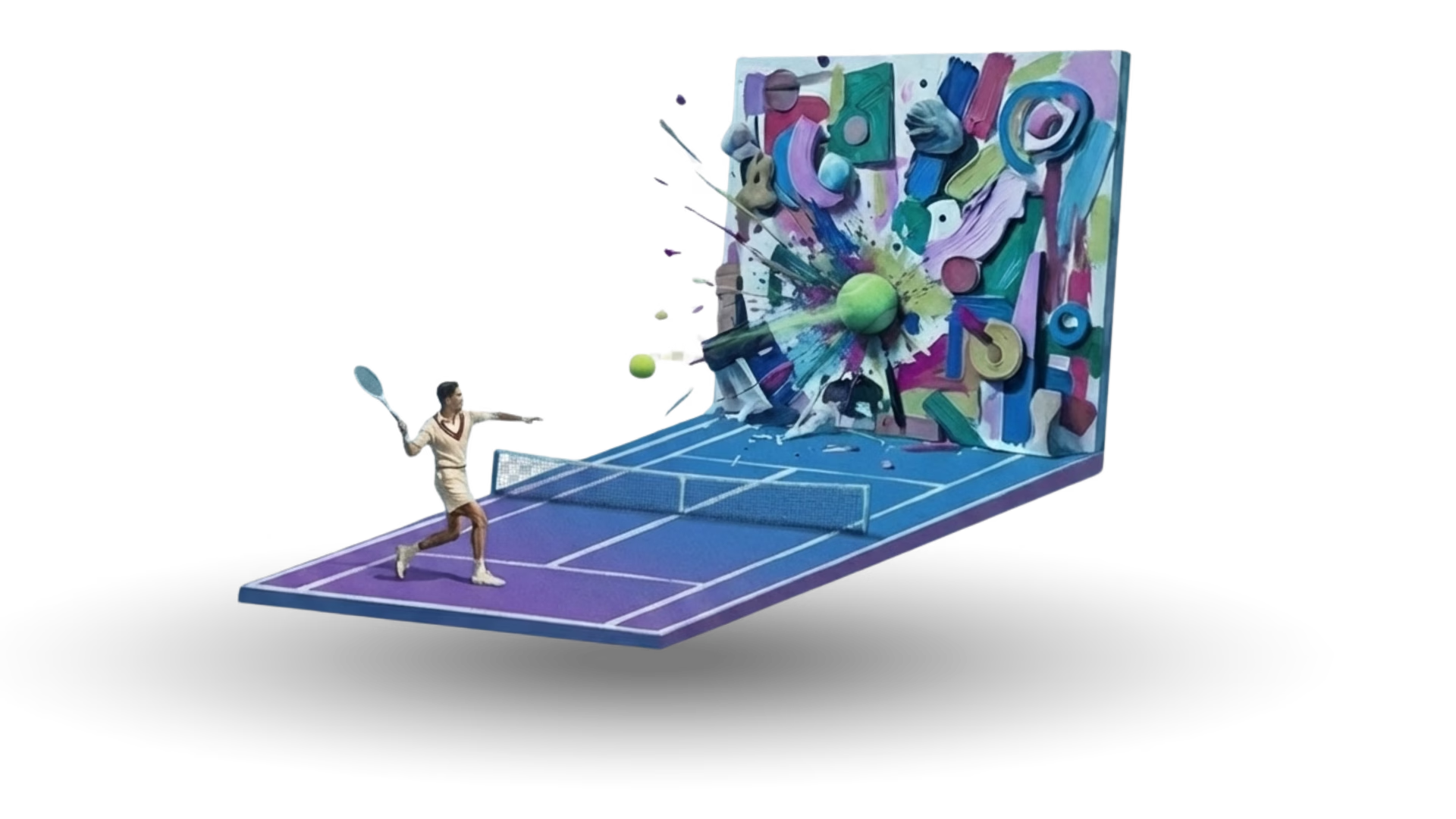
Tennis player hitting a ball toward a colorful abstract wall that explodes into shapes and paint

The 4-step idea capture system for founder content

Step 1: Capture ideas immediately

The second an idea appears, write it down.

Voice memo. Notes app. Scrap paper.

Messy is fine.

Step 2: Let the idea develop

Leave the idea alone for a while.

Thirty minutes. A few hours. Maybe a day.

Step 3: Decide if it belongs online

Revisit the note later.

Ask yourself if it actually belongs on your LinkedIn page.

Step 4: Let AI refine it

Now AI becomes useful.

It can tighten the writing.

But the idea is already yours.

Why the "embarrassing" ideas are usually the best ones

The best ideas often feel slightly uncomfortable.

Too honest.

Too personal.

Those are often the ideas people remember.

Why original perspective is the only real content advantage left

The internet doesn’t need more content.

It needs more real perspective.

A machine cannot experience a concert.

A machine cannot feel why something is funny.

Only humans can do that.

AI can polish your ideas.

But it cannot create your perspective.

Capture the idea.

Refine it.

Then publish it before you overthink it.

Let’s Build Your Social Media Strategy

If you’re tired of winging it, or you know your content could be sharper, smoother, and more strategic, we can help.

Let’s create a system that actually works.

GET IN TOUCH

Contact SSS Lighthouse Creative

Get in touch!

This field is for validation purposes and should be left unchanged.
Name(Required)
Email(Required)
What are you interested in?
Please let us know what's on your mind. Have a question for us? Ask away.

You will now see information with different branding. 

It is still us, with a slightly different look (for our nationwide clients).